Why Orthopedic Device Designs Fail in Manufacturing (And How DFM Prevents It)
If you’ve ever taken an orthopedic component from CAD (Computer-Aided Design) to production, you’ve likely seen this firsthand: a design that meets every functional requirement on paper, but starts to break down once it hits manufacturing. You may face shifting tolerances or geometries that are more complex than originally expected once tool access and machining constraints are considered.
Enter design for manufacturability (DFM). When working with orthopedic applications (especially those involving complex metal components), small design decisions can have a significant impact on cost, quality, and timeline. However, many of these constraints aren’t obvious until it’s far into the development process.
We recently spoke with Shawn Murphy, Director of Engineering, to better understand the importance of DFM, where breakdowns often occur, and how to catch them earlier, ensuring designs scale smoothly and avoid requiring costly rework.
Why “In-Spec” Designs Still Break Down on the Shop Floor
A design can meet every functional and performance requirement and still fail in production. That’s because, as Shawn notes, most designs are optimized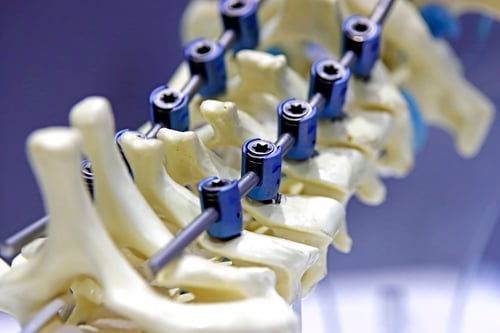 for end use (not for how the part will actually be made). When working with orthopedic devices, the gap is often subtle. On paper, a tolerance may look achievable or the geometry straightforward. Yet when the part moves into machining or production, these assumptions are tested against real-world constraints such as material behavior, repeatability, and scale.
Yet even designs that meet specifications on paper can create challenges in production:
- Features that are difficult to machine consistently
- Tolerances that are technically possible but not repeatable at scale
- Design elements that increase variation or require excessive secondary operations
The Hidden Complexity of Metal Components in Orthopedic Devices
When you’re working with orthopedic devices, you’re dealing with precision metal components, and metals introduce a unique set of challenges.
Shawn Murphy
Director of Engineering at Vantedge Medical
There are strict requirements for metals used in orthopedic systems for strength, durability, and biocompatibility. And the reality is the parts built for orthopedics often involve complex geometries and tight tolerances that push manufacturing limits.
In practice, this creates tradeoffs that aren’t always visible during design:
- Intricate geometries that are difficult to machine without specialized processes
- Tight internal features that limit tool access
- Surface finish requirements that add complexity to production
- Material characteristics that affect consistency across runs
Even small design choices (e.g., an edge condition or a feature depth) can influence whether a part becomes a source of variation. “This is especially true in high-precision processes like Swiss machining,” explains Shawn, “where geometry and accessibility directly impact manufacturability.”
Where Design for Manufacturability Breaks Down in Medical Devices
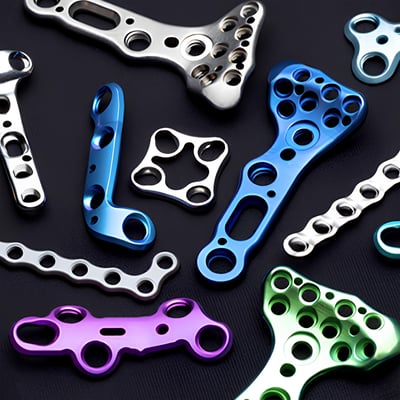 Most manufacturability issues come from decisions that made sense in isolation, but weren’t evaluated in the context of production. The pattern often looks like this: a design is optimized for a particular priority such as function or aesthetics. Manufacturing considerations are then addressed later, often after the design is locked in.
In this case, teams wind up reacting to issues, rather than designing to solve them. Adjustments end up being made under pressure. As a result, teams are forced to make quick fixes that can compromise consistency and increase costs as well as risks.
By this point, even the smallest change can create ripple effects across schedules and costs. Tolerances that are tighter than needed for performance may be difficult to maintain. Or other design features may increase variability. These issues compound quickly once production is underway.
Ultimately, the problem is that the part looks right in CAD but doesn’t translate cleanly to production. What works in a digital model doesn’t always reflect the realities of machining. Geometry, tolerances, and accessibility all directly affect how consistently a part can be made.
What Experienced Teams Do Differently
As Shawn puts it, “Teams that consistently avoid these issues approach design differently from the start. They treat manufacturability as a core design input instead of a downstream check.” Doing so means bringing manufacturing into the conversation early to evaluate geometry, tolerances, and materials in the context of production. This practice leads to simpler, more efficient designs that don’t compromise performance.
A small change in geometry could eliminate a complex machining step. A tolerance adjustment could improve repeatability without affecting function. These decisions reduce risk as much as cost.
It’s often the subtle design choices that drive complexity in manufacturing. When you address those early, everything downstream becomes more predictable.
Shawn Murphy
Director of Engineering at Vantedge Medical
How Early DFM Engagement Improves Both Cost and Quality
While DFM is often seen as a cost-saving measure, it plays an equally important role in quality for orthopedic device manufacturing. When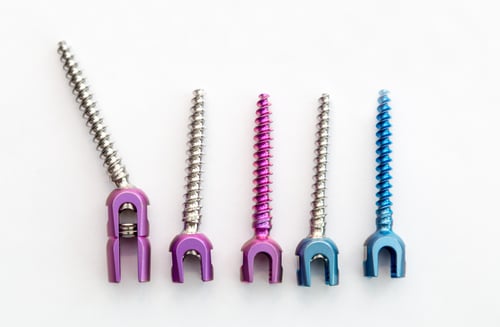 manufacturability is considered in early stages, processes can be selected with consistency in mind. Likewise, design choices are made to be aligned with real production capabilities. Sources of variation can be reduced before they become problems. And by building a more efficient manufacturing process, you create more reliable products. This early attention is key in orthopedic applications, where consistency and precision tie directly back to performance.
“Early DFM engagement makes the difference between a design that works once and one that performs consistently at scale,” says Shawn. It applies even more so when scaling production across multiple runs, operators, machines, and complex global supply chains.
What To Evaluate Before Finalizing an Orthopedic Design
Before locking in a design, evaluate the following key factors from a manufacturing perspective:
- Geometry: Are there features that add complexity without adding functional value?
- Tolerances: Are tolerances aligned with performance requirements, or are they tighter than necessary?
- Material behavior: How will the material respond during machining and finishing?
- Process alignment: Is the design suited to the intended manufacturing method?
- Scalability: Will this design hold up under production conditions (not just prototypes)?
In many cases, the difference between a smooth production ramp and a difficult one comes down to timing.
When manufacturing input is brought in during the initial design or early iterations, you have more flexibility to make informed decisions. Any adjustments that need to be made will be easier. Introducing this input later results in constrained decisions around risk, cost, and performance.
Take the First Step With Vantedge Medical
If you’re evaluating an orthopedic design and want to identify potential manufacturability challenges earlier, it’s time to bring a manufacturing perspective into the process sooner.
Explore how Vantedge Medical’s First Step™ approach supports early-stage design decisions. You can also connect with our team at OMTEC to discuss how to approach your next project with manufacturability in mind.